
About the New York County Family Court
The Family Court for New York County sits at 60 Lafayette Street in Lower Manhattan. It hears cases about children and families, and it works apart from the criminal and civil courts nearby. The court has a Help Center for people without a lawyer, and every visitor passes through a magnetometer at the door.
The official NYC Courts family pages identify the Manhattan Family Court and link its services. The screenshot below shows the family court county information page that points users to the right borough court.
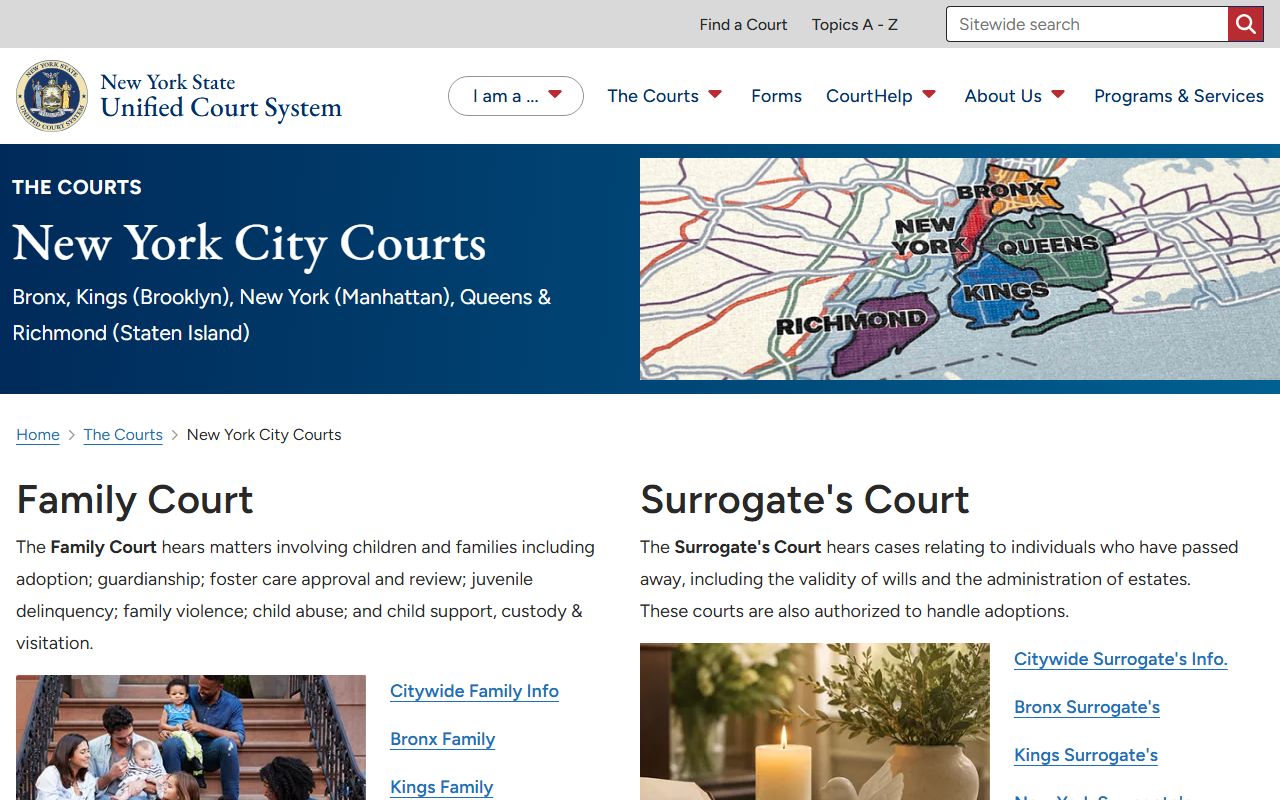
That official content identifies the Manhattan Family Court and its main address, which is the starting point for any in-person family records request.
What the New York County Family Court Handles
Family Court takes a wide range of family and juvenile matters. It does not handle divorce, which is a Supreme Court matter, but it does decide many issues that come up alongside a divorce. The table below lists the main case types.
| Case Type | What It Covers |
|---|---|
| Child Support | Support petitions, enforcement, and modification. |
| Custody and Visitation | Legal and physical custody, parenting time disputes. |
| Family Offense | Orders of protection in domestic violence cases. |
| Child Protective | Abuse and neglect petitions brought by the agency. |
| Juvenile Delinquency | Cases against youth under 16, with restricted records. |
| Paternity | Petitions to establish a legal father. |
| Guardianship | Guardianship of a child's person or property. |
| Adoption | Adoption petitions; files are sealed by law. |
The court also runs alongside the Integrated Domestic Violence model, which can join related criminal, family, and matrimonial issues for one family where the law allows. Divorce itself stays in the Supreme Court Civil Term.
Why New York County Family Court Records Are Confidential
Family Court files are not open the way civil and criminal dockets are. Family Court Act § 166 says these records are not open to indiscriminate public inspection. The court may permit inspection in its discretion, and certain agencies have access by law. A member of the public usually cannot pull a stranger's custody or child support file.
Adoption records get even stronger protection. Domestic Relations Law § 114 seals adoption papers and withholds them from inspection. Access after sealing requires a court order and specific statutory grounds. The image below shows the text of that adoption sealing statute.
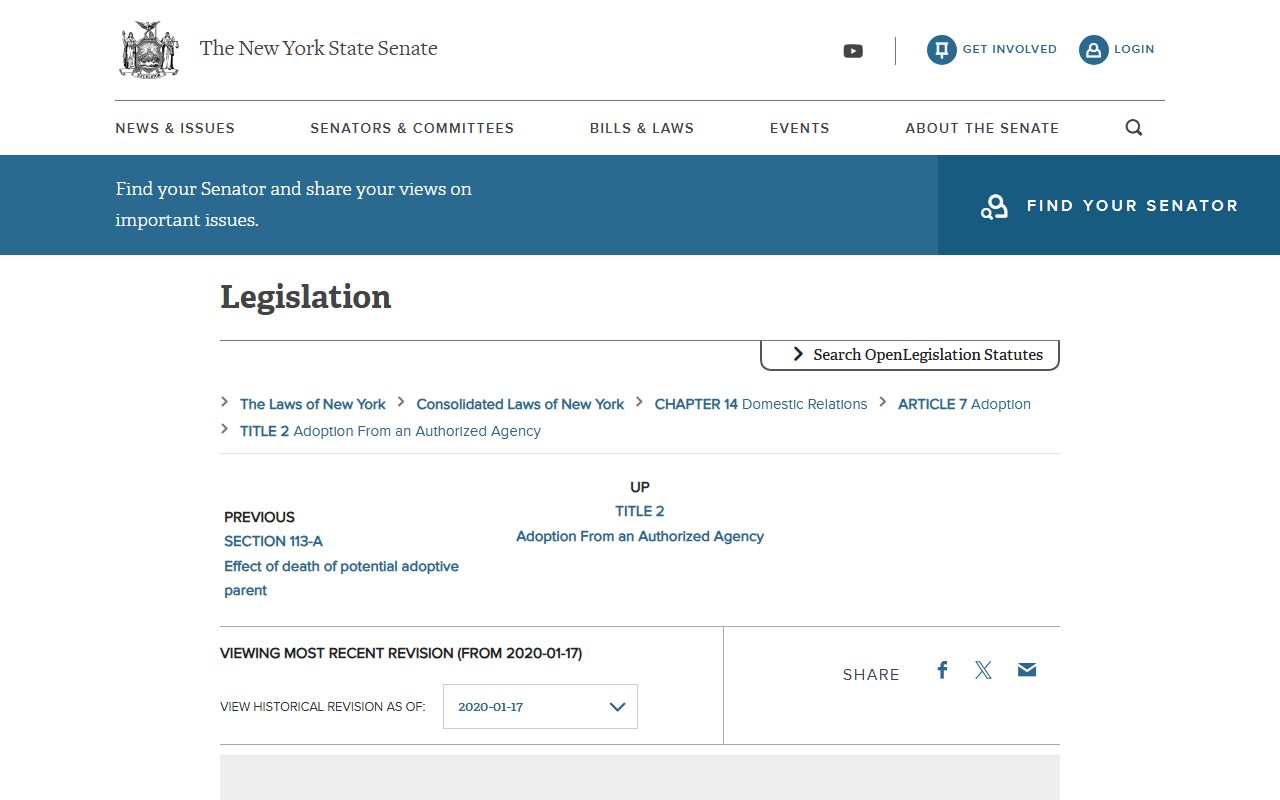
Juvenile delinquency files carry their own restrictions, so a public search will usually not return a young person's case at all.
Note: A party to a Family Court case can access their own file, but a non-party generally needs the court's permission or a statutory basis to inspect a record.
How to Search New York County Family Court Records
Active Family Court and Integrated Domestic Violence cases with a future date appear in WebFamily. The portal shows limited docket information, not full file documents. A search needs the court and either a file number or a docket number. The landing page below opens the search.
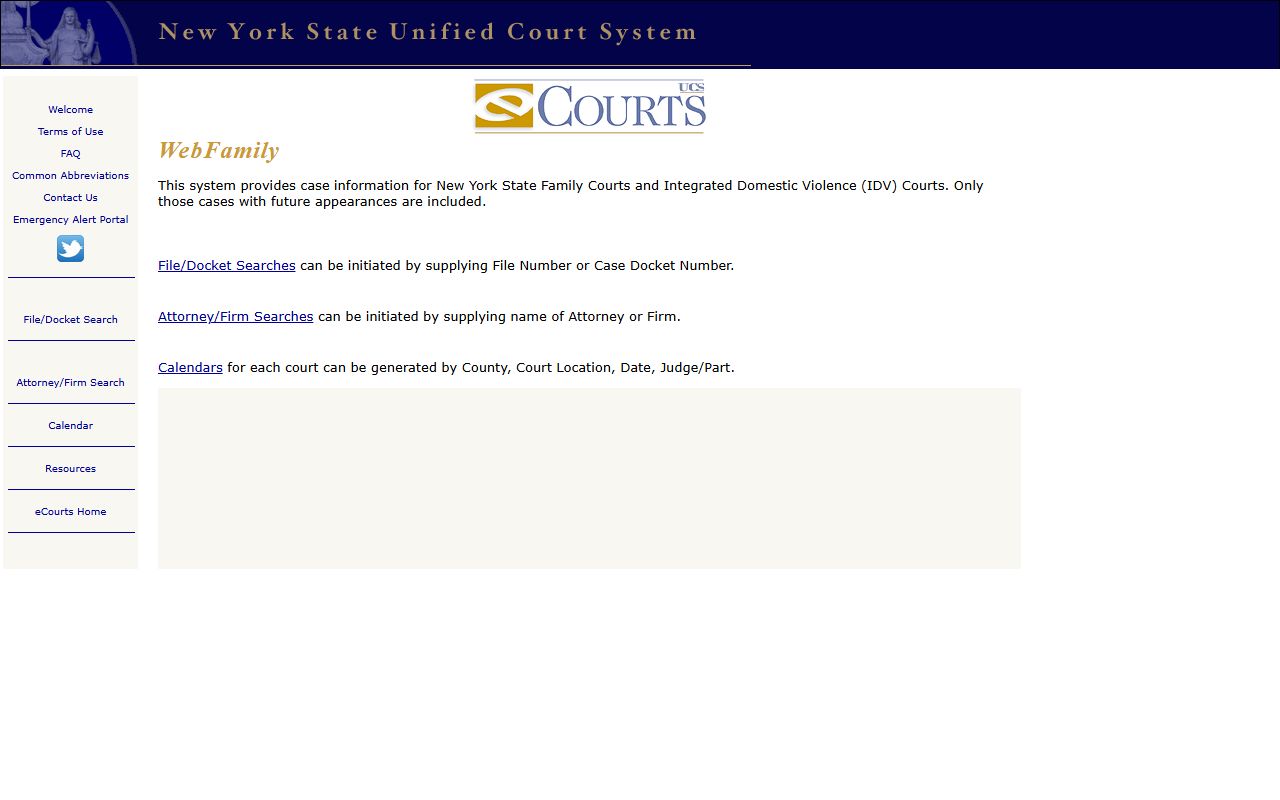
After the user picks the court, the file and docket search page asks for the case identifier, as shown next.
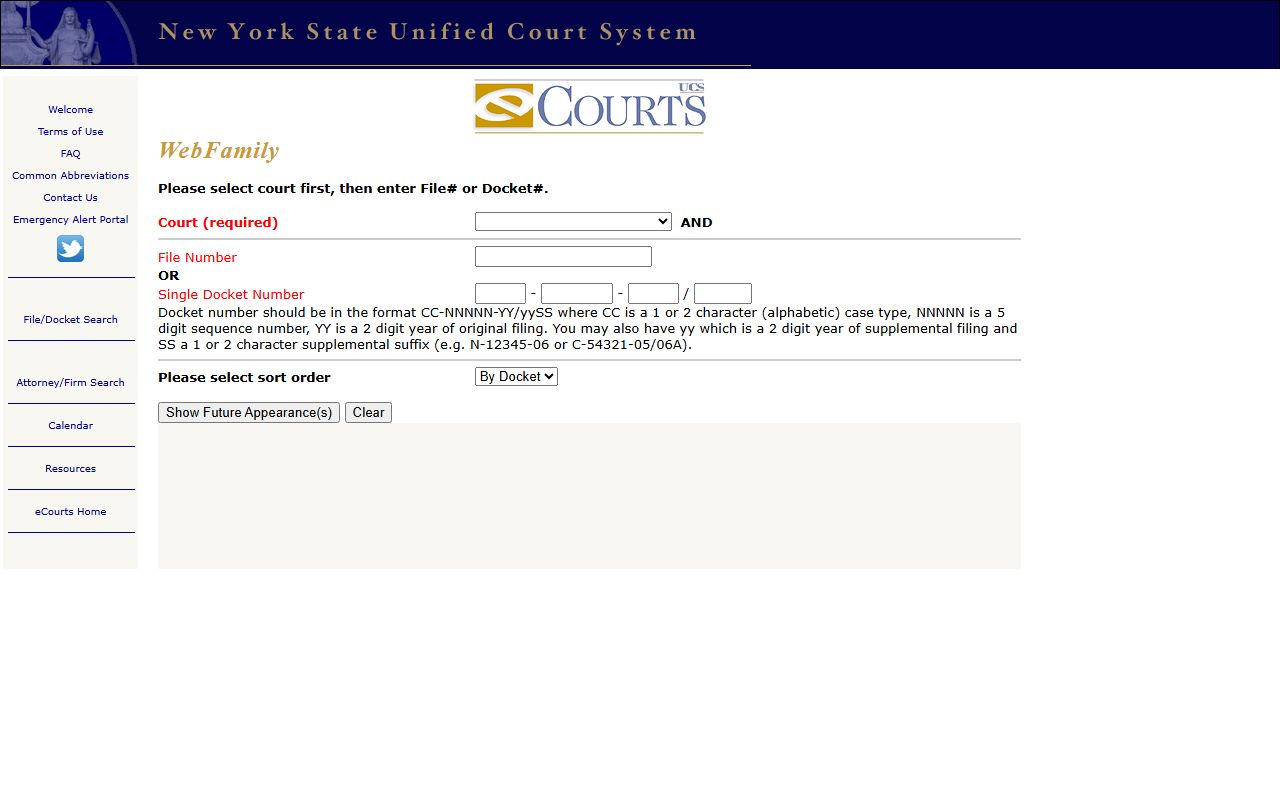
Because the data is limited, an absent case is not proof that no matter exists. Many records are confidential and never appear in the public portal.
WebFamily Search Fields for New York County
WebFamily uses a short set of fields. The court is required first, then the file or docket number. The docket number follows a set format. The table below lists the fields.
| Field Label | Type | Required | Notes |
|---|---|---|---|
| Court | Dropdown | Yes | Choose New York-Family for Manhattan. |
| File Number | Text | Yes unless docket used | Select court first, then enter the file number. |
| Single Docket Number | Structured text | Yes unless file used | Format CC-NNNNN-YY/yySS; examples N-12345-06 or C-54321-05/06A. |
| Sort Order | Radio | Optional | By docket or by date. |
The docket prefix letters mark the case type. An N docket points to a neglect or abuse case, while other letters mark custody, support, or family offense matters.
Child Support and Custody in New York County Family Court
Child support is one of the largest parts of the Family Court docket. A parent or caregiver files a petition, and a Support Magistrate hears the case and sets an order. The court can also enforce an order when payments stop, and it can change an order when income changes. Records of a support case show the parties, the order amount, and the next date, but the underlying financial papers stay private.
Custody and visitation cases decide who a child lives with and how the other parent shares time. The court looks at the best interests of the child. A judge may appoint an attorney for the child, sometimes called a law guardian, to speak for the child's interests. These files are sensitive, and access follows the same confidentiality rule as the rest of the court.
Paternity cases establish a legal father, often as a first step before a support order. Guardianship cases let an adult take legal responsibility for a child's person or property. Many families have more than one case type open at once, and the court tries to keep related matters before the same judge.
Family Offense and Orders of Protection
Family Court hears family offense petitions, which ask for an order of protection in a domestic violence situation. A person can file without a lawyer, and the court can issue a temporary order the same day in many cases. The order can tell the other party to stay away, stop contact, or leave a shared home.
A family offense case can run at the same time as a criminal case about the same incident. The criminal side goes to the NYC Criminal Court, while the family side stays here. The Integrated Domestic Violence model can join the related criminal, family, and matrimonial matters for one family before a single judge where the law allows. Even then, the Family Court and matrimonial parts of the file stay confidential.
Note: The Family Court Help Center can guide a self-represented person through a family offense petition, but it cannot give legal advice or act as a lawyer.
Family Court Terms Explained
Family Court uses its own words, and they can confuse a first-time visitor. The short glossary below defines the terms that come up most often in a New York County family case.
- Petitioner
- The person who starts the case by filing a petition.
- Respondent
- The person who must answer the petition.
- Support Magistrate
- The official who hears child and spousal support cases and sets the order.
- Attorney for the Child
- A lawyer the court appoints to speak for a child's interests.
- Order of Protection
- A court order that limits contact or conduct in a family offense case.
- Docket Number
- The case identifier used in WebFamily, with a letter prefix for the case type.
New York County Family Court Location and Help
The Manhattan Family Court is at 60 Lafayette Street. It has a Help Center for self-represented people, which can guide a parent through forms and procedure. Call ahead if you need an interpreter or a disability accommodation, since the court asks for a few days' notice.
New York County Family Court
60 Lafayette Street
New York, NY 10013
646-386-5223
Magnetometer screening at entry
Family Court Help Center
60 Lafayette Street
New York, NY 10013
646-386-5340
Self-help for Family Court users
For child support enforcement tools that run outside the court, the state also keeps a warrant notice system, covered on the warrant page.
Getting Your Own New York County Family Court Records
A party to a Family Court case can usually get a copy of their own file. The request goes to the Family Court clerk at 60 Lafayette Street, not to the County Clerk, which holds Supreme Court records only. Bring a government ID and the docket number if you have it. The clerk can confirm what is in the file and how to get a certified copy for a benefits claim, an immigration matter, or another court.
WebFamily is not a substitute for the paper file. It shows only active cases with a future date and limited docket data. A closed case, a sealed matter, or a confidential adoption record will not appear there at all. For those, the in-person clerk's office is the only path, and access still follows the confidentiality limits set by state law.