
How to Search New York County Court Records
Manhattan court records sit in several official systems, not one master site. The state Unified Court System runs the public eCourts gateway, which links to WebCivil Supreme, WebCivil Local, WebCriminal, WebFamily, and eTrack. The New York County Clerk holds Supreme Court case files at 60 Centre Street. The Surrogate's Court at 31 Chambers Street holds wills, estate, and adoption-related files. New York City Criminal Court and the Supreme Court Criminal Term share 100 Centre Street and 111 Centre Street.
Before starting a search, gather the case index or docket number, party names, approximate filing year, and the case type. The County Clerk gives index number examples such as 12345/1985 or 123456/2010, and these speed retrieval at the Records Department.
- Pick the right portal for the case type. Use WebCivil Supreme for Manhattan civil suits, divorce dockets, Article 78, and commercial matters at iapps.courts.state.ny.us/webcivil/FCASMain.
- For NYC Civil Court, small claims, and landlord-tenant cases, use WebCivil Local.
- For pending criminal cases with future appearances, use WebCriminal, then choose Case Identifier or Defendant search.
- For active Family Court and Integrated Domestic Violence dockets, use WebFamily.
- For probate, estate, and administration matters, use WebSurrogate.
- If the file is older or not online, request it from the County Clerk Records Department at 60 Centre Street, Room 103B, or call 646-386-5942.
The Civil Term About the Court page lays out which records the County Clerk maintains and which sit with the chief clerk. See the screenshot below.
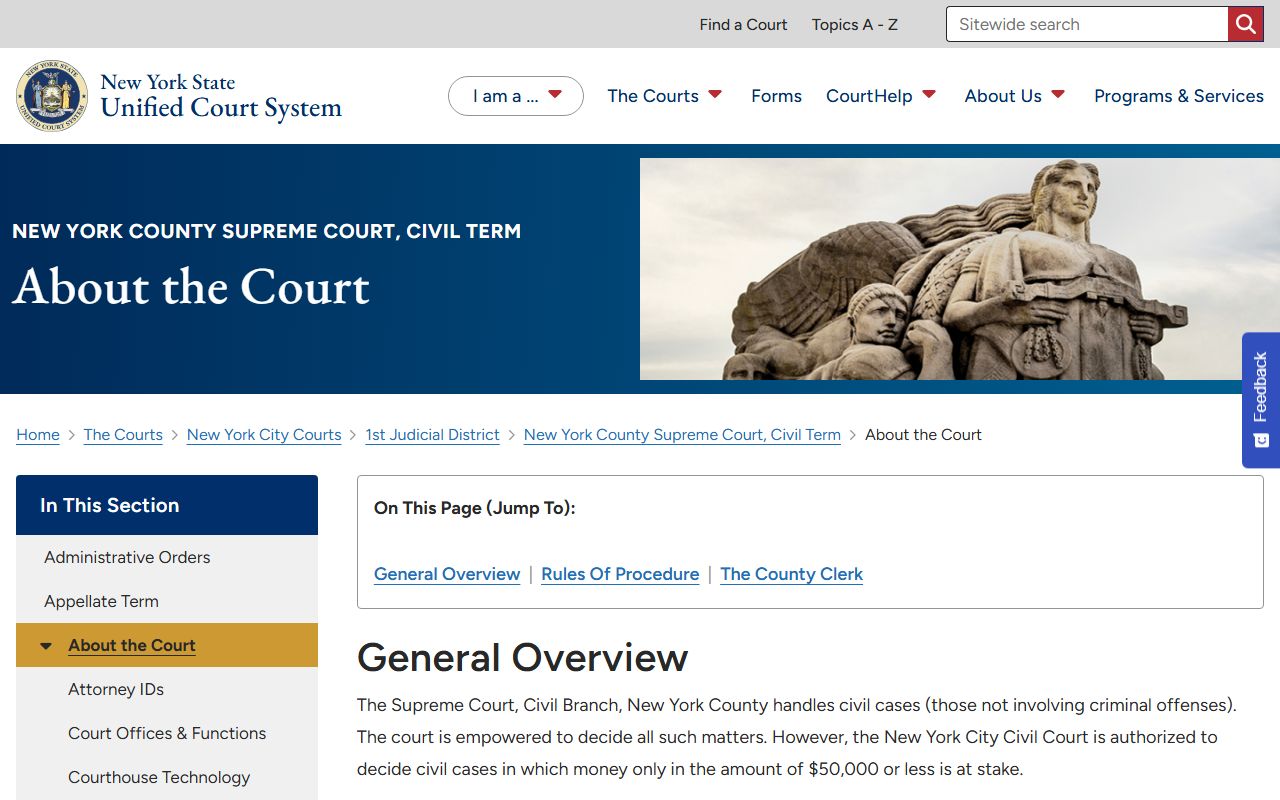
The page sets out the court's general civil jurisdiction, the appeals path to the Appellate Division First Department, and the County Clerk's role as the official records office for Supreme Court files.
The New York County Court System
Court names in New York can confuse new users. The Supreme Court is the state trial court of general jurisdiction, not the top appellate court. The state's highest court is the Court of Appeals in Albany. In Manhattan, Supreme Court has a Civil Term at 60 Centre Street and a Criminal Term at 100 and 111 Centre Street. Lower city courts handle smaller matters: NYC Civil Court for claims up to $50,000 and housing cases, NYC Criminal Court for misdemeanors and arraignments, Family Court for child and family matters, and Surrogate's Court for estates.
Manhattan is part of the 1st Judicial District. Appeals from Supreme Court usually move to the Appellate Division, First Department at 27 Madison Avenue. Appeals from NYC Civil Court and NYC Criminal Court for New York and Bronx Counties go to the Appellate Term, which sits at 60 Centre Street.
Case flow: NYC Criminal Court › Supreme Court Criminal Term › Appellate Division, First Department › New York Court of Appeals
| Court | Jurisdiction | Case Types |
|---|---|---|
| Supreme Court Civil Term | General civil, unlimited dollar amount | Tort, contract, Article 78, divorce, foreclosure, commercial |
| Supreme Court Criminal Term | Felony prosecutions in Manhattan | Felonies after indictment or SCI, IDV, judicial diversion |
| NYC Civil Court, New York County | Up to $50,000 | Small claims to $10,000, housing/landlord-tenant, civil |
| NYC Criminal Court, New York County | Misdemeanors and lesser offenses | Arraignments, misdemeanors, summons cases |
| New York County Family Court | Family matters | Child support, custody, abuse/neglect, juvenile delinquency |
| New York County Surrogate's Court | Estates and related matters | Wills, administration, guardianship, adoption |
| Midtown Community Justice Center | Community court | Local quality-of-life and select misdemeanor cases |
New York County Courthouses
Most Manhattan court work happens in a tight cluster of buildings around Foley Square and Centre Street. The same blocks hold the County Clerk, the Surrogate's Court, federal courts, and city agencies. The Civil Term facilities page lists each related address.
The image below shows the official facilities directory for Supreme Court Civil Term, with 60, 80, and 111 Centre Street and 71 Thomas Street.
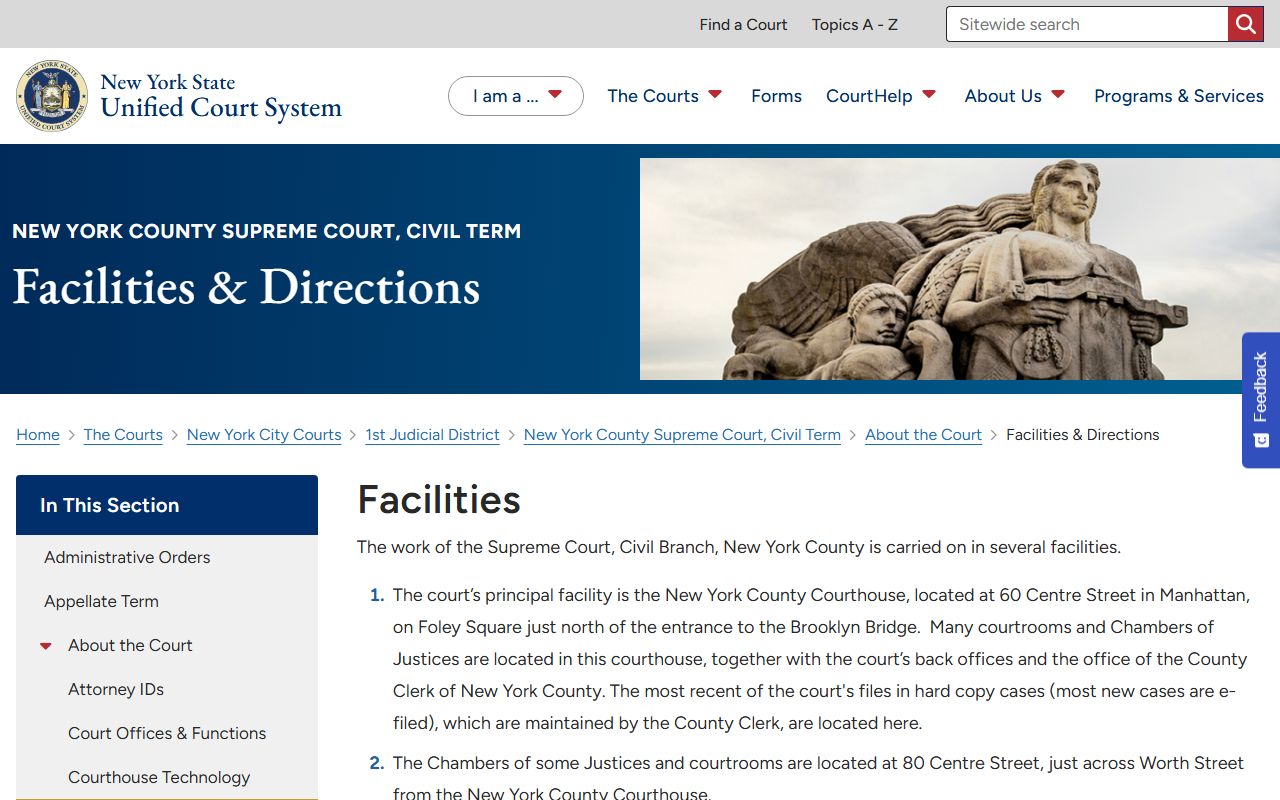
Visitors should confirm the exact room and building before traveling. Several Centre Street addresses share the same street name but house different courts and clerks.
Federal Courts in Manhattan
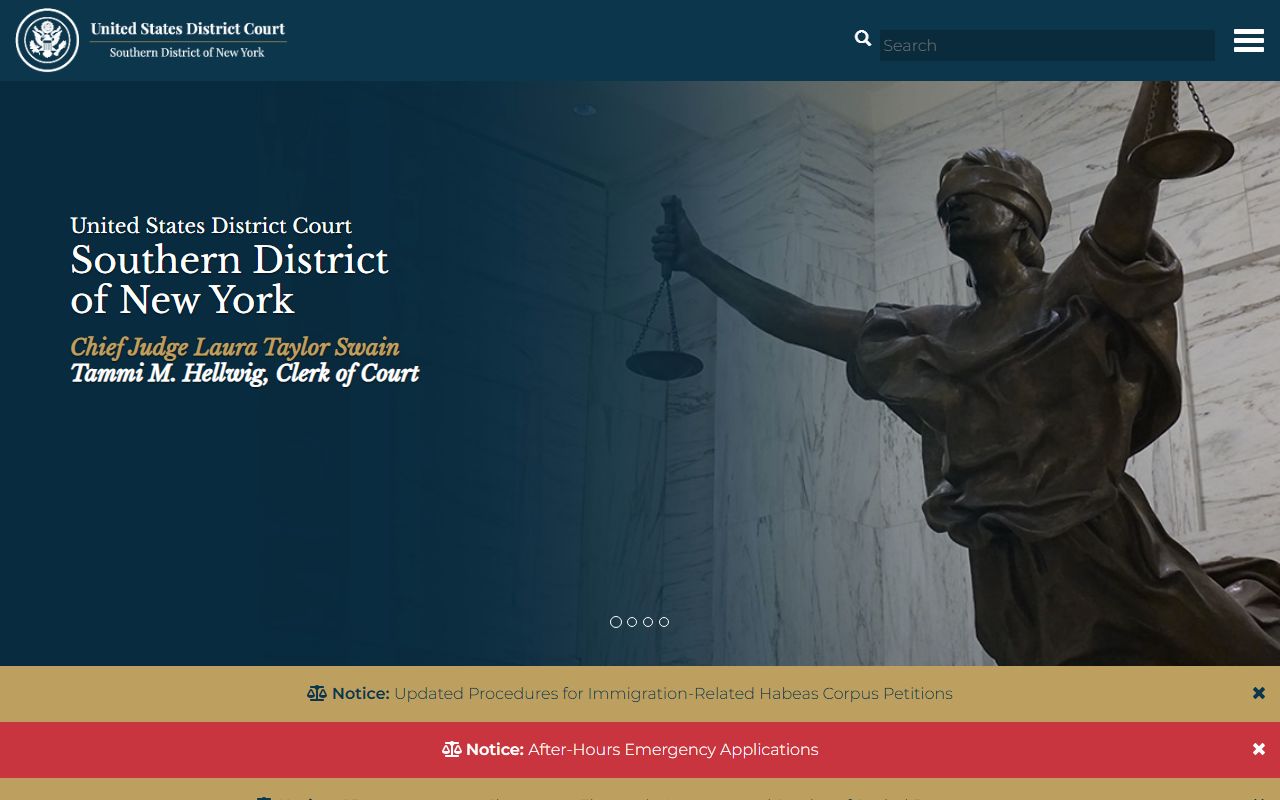
Not every Manhattan case is a state case. New York County sits in the U.S. District Court for the Southern District of New York, known as SDNY. The court handles federal civil and criminal matters, securities, civil rights, and many cases of national weight. It has sat in lower Manhattan since 1789. The main courthouses are the Daniel Patrick Moynihan U.S. Courthouse at 500 Pearl Street and the Thurgood Marshall U.S. Courthouse at 40 Foley Square.
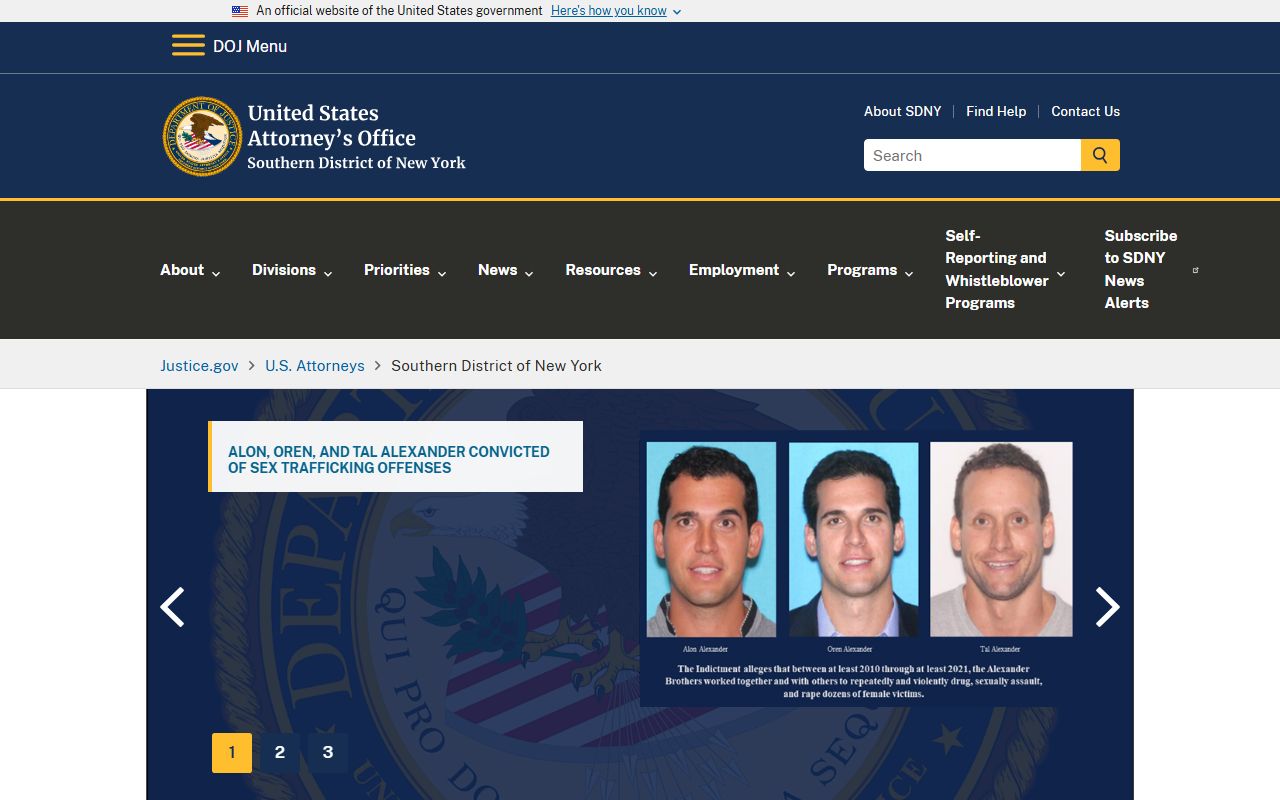
The SDNY homepage is the starting point for federal court information, dockets, and filing rules.
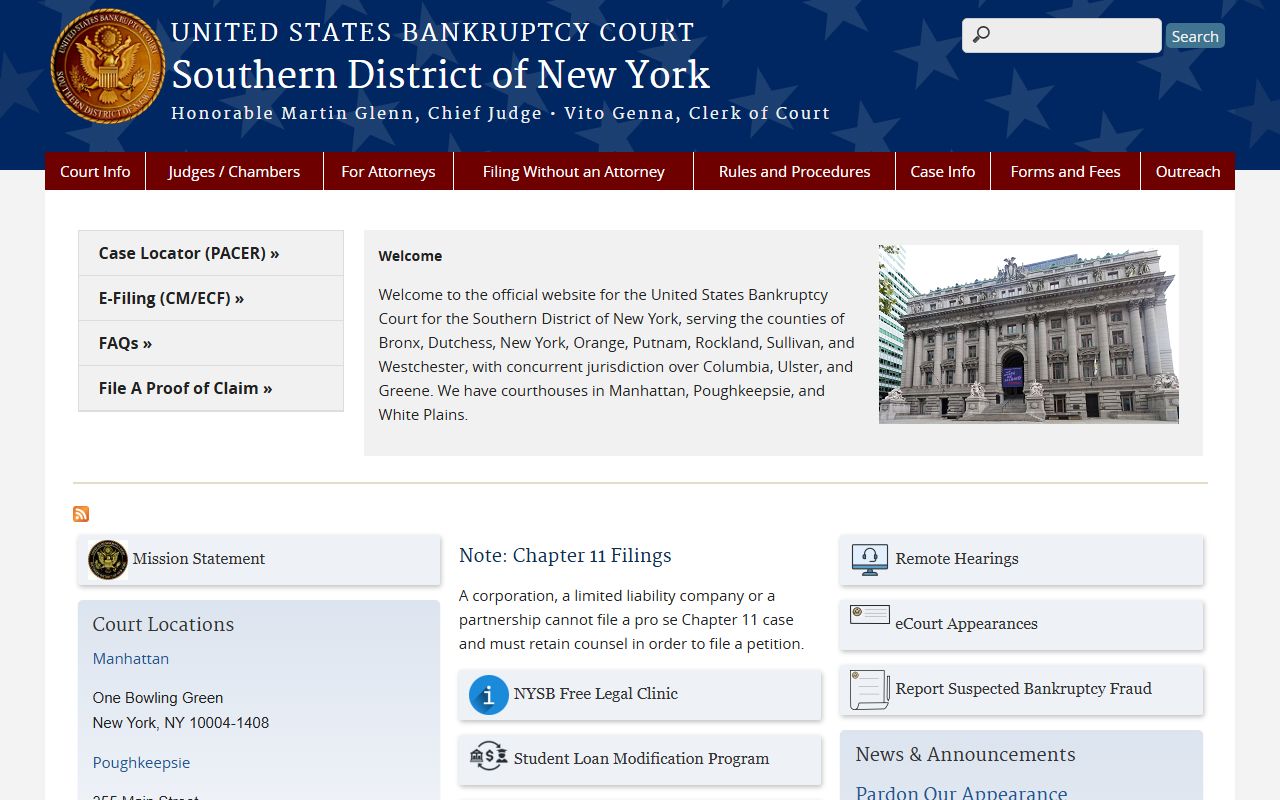
Federal bankruptcy cases for Manhattan go to the U.S. Bankruptcy Court for the Southern District of New York, a separate court with its own portal.
Federal criminal prosecutions in Manhattan are brought by the U.S. Attorney's Office for the Southern District of New York. Its site lists press releases and office information.
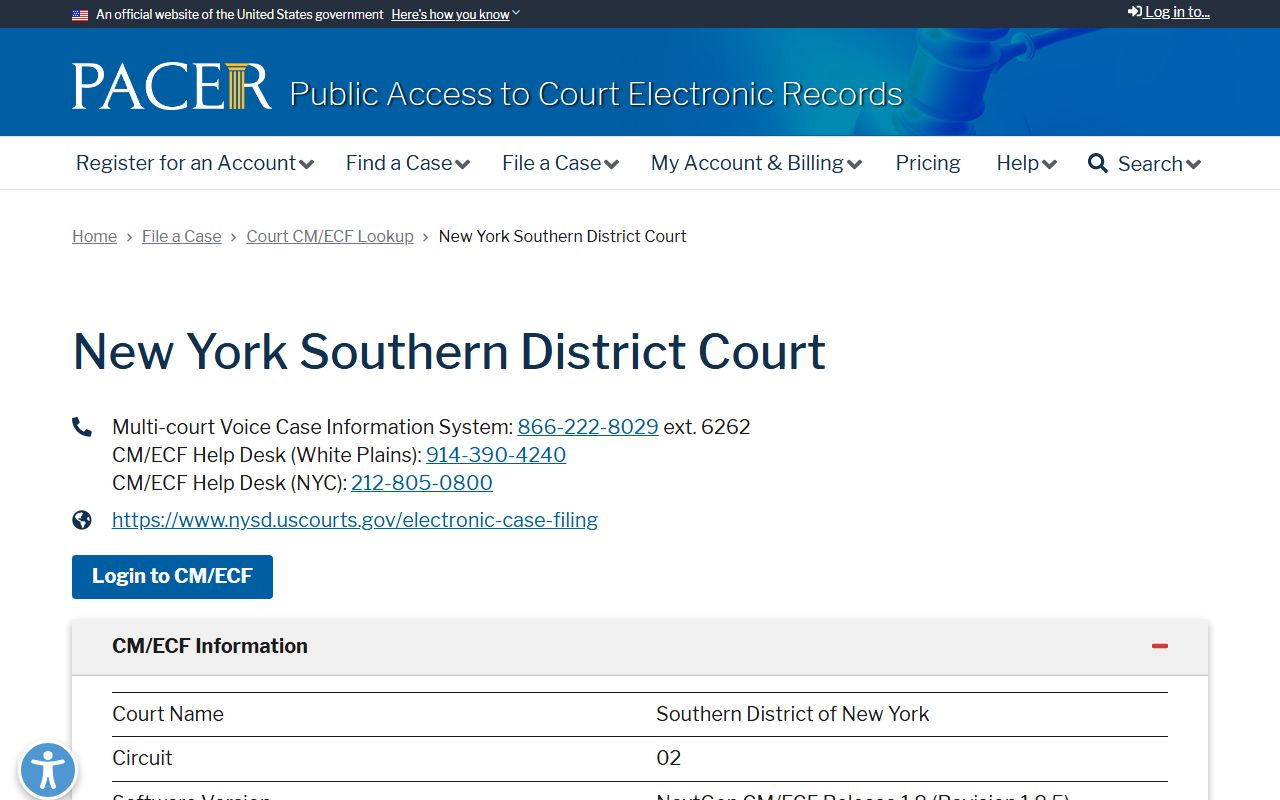
To read federal dockets and documents, the public uses PACER, the federal judiciary's case access system. PACER needs an account and charges fees, with some waivers. The SDNY court information page sits within PACER.
For a free alternative to read federal opinions and many filings, CourtListener hosts RECAP documents, though it is not an official court source.
For people in federal custody, the Federal Bureau of Prisons Inmate Locator is the right tool, separate from the city and state systems covered on the inmate records page.
Types of Court Records Available in New York County
Manhattan courts produce a wide mix of files. Civil Supreme records cover tort, contract, Article 78, foreclosure, and commercial matters. Matrimonial records sit in Supreme Court but stay confidential under Domestic Relations Law Section 235. Criminal Court records cover misdemeanors and lesser charges. Supreme Criminal records cover felonies after indictment. Family Court records cover child and family matters under tight privacy rules. Surrogate's Court records cover estates, wills, and guardianship.
Local civil case types in WebCivil Local include LT for landlord-tenant, SC for small claims, CV for general civil, MI for miscellaneous, NC for name change, RE for replevin, CC for consumer credit, and TS for tax surcharges.
- Supreme Civil records: complaints, motions, orders, judgments, notices of appeal, RJIs, and notes of issue at the County Clerk.
- Criminal and arrest records: arrest reports, court docket entries, dispositions, and sealing orders.
- Matrimonial and family records: confidential under DRL 235 and Family Court Act 166.
- Surrogate's Court records: wills, letters testamentary, administration, accounting.
- Traffic and VTL records: DMV Traffic Violations Bureau for non-criminal moving violations.
- Judgment and lien docket: held by the New York County Clerk for money judgments, mechanic's liens, and notices of pendency.
What New York County Court Records Show
Each portal returns a slightly different set of fields. WebCivil Supreme uses an index number; WebCivil Local uses case type, sequence, year, and court code; WebCriminal uses a case or summons number. All show the court, parties, case type, status, and assigned justice or judge. Documents do not always appear; full files may require NYSCEF, a public terminal, or a clerk copy.
| Field | What It Shows |
|---|---|
| Index or Case Number | The court's unique identifier for the file. |
| Filing Date or Year | When the case began. WebCivil filters by year from 1983 to 2026. |
| Parties | Plaintiff, petitioner, defendant, respondent, or corporation. |
| Case Type or Cause | Tort, contract, Article 78, matrimonial, foreclosure, felony, misdemeanor, etc. |
| Justice, Judge, or Part | Assigned justice, calendar part, or court part. |
| Disposition or Status | Open, active, restored, disposed, sealed, or transferred. |
| Future Appearance | Next court date for active matters. |
| Docket Entries | Motions, orders, decisions, notes of issue, judgments. |
Public Access Laws for New York County Court Records
New York treats court records and agency records under separate access regimes. The Freedom of Information Law (FOIL) applies to executive agencies under Public Officers Law § 87 and Public Officers Law § 89. Court case files follow court-specific rules, sealing statutes, and the Unified Court System's public access guide. The County Clerk acts as the official custodian for Supreme Court records.
Sealing statutes shape what shows in any public search. After a favorable termination, Criminal Procedure Law Section 160.50 seals court, police, and prosecutor records. CPL 160.55 seals after certain noncriminal outcomes. CPL 160.59 allows petition sealing of older eligible convictions. The 2024 Clean Slate Act, codified at CPL 160.57, calls for automatic sealing after statutory waiting periods.
Key Statutes:
Public Officers Law § 87: Requires agencies to release records subject to listed exemptions for privacy, law enforcement, and security.
CPL § 160.50: Seals court, police, and DCJS records after a criminal action ends in favor of the accused.
CPL § 160.59: Allows petition-based sealing of up to two eligible convictions, with a $10 NYC court fee.
Domestic Relations Law § 235: Bars public inspection of matrimonial pleadings, agreements, judgments, and testimony.
Family Court Act § 166: Family Court records are not open to indiscriminate public inspection.
Records That Are Restricted or Confidential
Many Manhattan court files are not open to the public. Matrimonial cases are restricted under DRL 235; parties, attorneys of record, or non-parties with an original notarized authorization may inspect them. Family Court records sit behind Family Court Act 166. Adoption files are sealed under DRL 114. Juvenile delinquency and youthful offender materials are restricted by statute and rule.
WebCriminal does not show warrants, finished cases, or sealed cases. Grand jury proceedings are secret. Mental Hygiene Article 81 guardianship proceedings may be sealed for good cause under Mental Hygiene Law 81.14. Name change records may be sealed under Civil Rights Law Section 64-a. To inspect a sealed Manhattan file, a party usually files a motion in the court of conviction, serves the District Attorney, and asks the court to unseal for a defined purpose.
Note: A blank result on WebCriminal does not prove the case never existed; sealed, finished, and warrant-only matters fall outside what the public WebCrims page shows.
Specialty Court Parts in Manhattan
The Supreme Court Criminal Term runs 37 distinct court parts across 100 Centre Street and 111 Centre Street. Among them are a Judicial Diversion part for eligible substance-use treatment, a Mental Health part, a Veterans Court part, an Integrated Domestic Violence part, a Grand Jury part, a Gun Waiver part, and an Alternatives to Detention part.
The Midtown Community Justice Center at 314 West 54th Street serves as a community court for quality-of-life cases in the Midtown area. Clerk hours are Monday to Friday, 9:00 a.m. to 4:30 p.m. The general line is 646-264-1300; the clerk's office is 646-264-1330.
Treatment courts and IDV parts can change a case path. A defendant routed to a diversion or mental health part may still be searchable through WebCriminal for future appearances, but full disposition and treatment information may be restricted by mental health privacy rules and sealing statutes.
NYC Jails and Manhattan Arrests
New York County does not run its own sheriff jail. The NYC Department of Correction runs the city jail system, mostly on Rikers Island, plus hospital prison wards at Bellevue and Elmhurst. People arrested in Manhattan are processed by NYPD, brought to arraignment at NYC Criminal Court, and either released or remanded to DOC custody. The NYC Sheriff is a civil enforcement officer under the Department of Finance, not the operator of a jail.
The official jail lookup is the NYC DOC Person in Custody Lookup. It returns the person's current DOC location and basic case data; it does not show police custody, state prison, or federal custody. For full details see New York County inmate records and warrant records for active warrant guidance.
Marriage, Divorce, and Surrogate's Records
Marriage licenses and ceremony records for Manhattan are held by the NYC City Clerk, not the New York State DOH and not the New York County Clerk. Appointments run through Project Cupid at nyc.gov/cupid. Divorce records sit in Supreme Court at 60 Centre Street, but DRL 235 blocks public inspection. See Manhattan marriage and divorce records for the full path. Probate records are at the Surrogate's Court, 31 Chambers Street.
- Testator
- A person who has signed a will.
- Executor
- The person named in a will to manage the estate.
- Administrator
- The person appointed when there is no will, common in small estates.
- Letters Testamentary
- The Surrogate's order giving the executor legal authority to act.
- Article 81 Guardian
- A guardian appointed in Supreme Court for an alleged incapacitated person.
New York County Court Records Fees
The County Clerk Records Department lists clear fees. Payment may be cash, certified check, attorney check, credit card, money order, or official bank check. Personal and company checks are not accepted. Credit card charges carry a 2.99% surcharge.
| Item | Amount |
|---|---|
| Public terminal print or photocopy | $0.25 per page |
| Private copy machine (older or off-site files) | $0.35 per page |
| Certification | $8 plus $0.25 per page |
| Certified copy by mail | $8 |
| Exemplification in person | $33 plus $0.25 per page |
| Index Number | $210 |
| Request for Judicial Intervention | $95 |
| Motion or order to show cause | $45 |
| Note of Issue, uncontested matrimonial | $125 |
| Search Certificate | $5 per two years searched |
| Surrogate Petition to Search Apartment | $26 (no personal checks) |
How to Read New York County Court Records
Index numbers run in the form 12345/1985 or 123456/2010, with the sequence first and the year second. NYC criminal docket numbers follow CR-######-YYSU, where the trailing letters mark the court and county. A docket entry that reads "RJI" means a Request for Judicial Intervention, used to assign a justice. "Note of Issue" places a case on the trial calendar. A "disposition" is the outcome of a case or charge.
Arrest does not equal conviction. The court file may show a charge, a plea, a dismissal, an acquittal, a conviction, or a sealing order. Always read the disposition before drawing a conclusion. For a list of recurring abbreviations and roles, see the Manhattan court records page.
Accuracy and Record Limitations
Online systems can lag. The WebCriminal help page warns of intermittent delays in updating case information. The County Clerk records page lists separate storage methods by year: 1955 to 1984 on microfiche, certain 1985 to 1997 divorce files on microfilm, scattered hard copy onsite for years like 2004 through 2013, and public terminal access for 2015 to current. Files from 1910 to 1954 are ordered from off-site storage every Friday with a 2 to 3 business day wait.
Note: Confirm anything time-sensitive directly with the County Clerk Records Department at 646-386-5942 before relying on a public terminal or online search.
History of New York County Courts
Manhattan's court history runs back to the colonial era. The federal District of New York held its first session in November 1789 at the Old Royal Exchange in lower Manhattan, and the Southern District has sat in the same neighborhood since. The 60 Centre Street courthouse on Foley Square has long anchored Supreme Court Civil Term, with related buildings at 80 Centre Street, 111 Centre Street, and 71 Thomas Street.
In August 2014 the County Clerk introduced new case management software and began scanning hard-copy filings into digital form. The shift to NYSCEF e-filing and eCourts terminals has changed how the public reaches Manhattan court files, while older records still need microfiche, microfilm, or off-site retrieval.
Self-Help and Legal Aid in New York County
A person without a lawyer is not on their own in Manhattan. The court system runs Help Centers, and several nonprofits offer free or low-cost legal help. The NY Courts CourtHelp site gives do-it-yourself forms and a plain-language glossary. The Supreme Civil Term Public Access Library at 80 Centre Street, Room 468, holds procedural materials, and the Family Court Help Center at 60 Lafayette Street guides self-represented parents.
For criminal cases, the Manhattan defense providers cover most people who cannot afford a lawyer. New York County Defender Services is one of the main Manhattan criminal defense offices, and its site lists how to get help.
The Legal Aid Society offers help with criminal defense, housing, benefits, immigration, and family matters across the city. Its get-help page is the entry point for many Manhattan residents.
For questions about a criminal case or a victim matter, the Manhattan District Attorney's Office handles prosecutions in New York County. Its contact page lists how to reach the office.
For records help by topic, see court records, arrest records, or the FAQ.
Frequently Asked Questions
Where do I search Manhattan Supreme Court civil cases?
Use WebCivil Supreme for active and disposed civil cases in New York County. The portal lets users search by index number, party name, attorney or firm, or justice. For documents, check NYSCEF, a public terminal at 60 Centre Street, or the County Clerk Records Department. The Clerk gives examples like 12345/1985 or 123456/2010 and asks for the index number when possible.
Why is the Supreme Court a trial court in New York?
New York uses "Supreme Court" as the statewide trial court of general jurisdiction. The state's highest court is the Court of Appeals. Most Manhattan civil and felony trials happen in Supreme Court. Appeals usually move to the Appellate Division, First Department. Some appeals from NYC Civil Court and NYC Criminal Court go to the Appellate Term sitting at 60 Centre Street.
Can I search active arrest warrants for Manhattan online?
No official New York County public criminal warrant list exists. WebCriminal does not show warrants. Civil tax warrants are searchable through the New York State Tax Department. For a bench warrant, call the relevant court clerk or speak with counsel. The full FAQ covers more search and sealing questions.
For more answers see the New York County Court Records FAQ page.